The Hidden Cost of Turning Youth Sports into a Business
Are you watching your young athlete lose their spark?
Does the car ride home feel more like a debrief of a stressful shift than a chat about a game?
You aren’t alone.
As both a coach and a mentor, I see more parents and players than ever grappling with how to keep sports fun as the stakes—and the commitments—skyrocket.
Today, I want to dive into why the youth sports world is shifting toward a "professional" model, how it’s harming our kids, and how we can flip the script to build a culture that prioritizes skill, health, and a lifelong love for the game.
The "Professionalization" Trap: Why Youth Sports are Struggling
When Kids Become Products
I’ve noticed a disturbing trend: the commercialization of youth sports has turned children into line items on a spreadsheet. Organizations are increasingly treating 12-year-olds like pro athletes, demanding year-round drilling and expensive tournament schedules designed more to generate revenue than to develop talent.
"When we turn a kid’s game into a business, it’s a slippery slope. 12-year-olds should never be trained like pros—it’s the fastest lane to total burnout."
The Emotional Toll on the Athlete
I’ve coached seniors who were ready to hang up their jerseys not because they lost their love for basketball, but because they were simply exhausted. When we force early specialization and high-pressure environments, we strip away the "play" in playmaker. The pressure to perform—often fueled by the "pay-to-play" model—replaces development with a transaction.
The Reality Check: Kids need sports to be a learning laboratory, not a business deal.
Building a Culture of True Development
From Payment to Performance
In the current youth sports landscape, there is a dangerous unspoken agreement: “I pay the club fees, so my child is entitled to minutes.”
This mindset is the single greatest hurdle to player development. When we treat roster spots as something parents buy, we strip the athlete of the necessity to struggle, compete, and grow.
Creating Transparency through "Growth Metrics"
To eliminate the friction between parents, coaches, and players, I utilize Objective Standards. If a player understands exactly why they are or aren't on the floor, the "mystery" of coaching decisions vanishes.
We track metrics that require zero talent but 100% effort. This includes deflections, floor dives, box-outs, and "sprints to the corner."
In my program, effort and attitude account for 50% of the evaluation for playing time. You can be the most skilled shooter on the court, but if you don't sprint back on defense, you've essentially "benched" yourself.
Instead of telling a player they "need to play harder," I show them the data. "You participated in 12 defensive rotations but only closed out with a high hand twice." This turns a subjective argument into a coaching moment.
When an athlete has to earn their role, they learn resilience.
In the real world, a paycheck isn't guaranteed just because you showed up; it’s guaranteed because you provided value. By enforcing performance standards now, we are preparing them for the reality of high school, college, and the professional workforce.
They learn that their output, not their investment, is what moves the needle.
The Power of Intentional Coaching: Trust over Tactics
Traditional coaching is top-down, but I prefer a circular model where the team holds itself accountable.
Our "Dogs of the Day" award is the cornerstone of this philosophy.
At the end of every session, the players huddle and vote on a winner. I don't pick the recipient—they do. They have to nominate a teammate and provide a specific reason, such as, "I'm nominating Sarah because she dived for three loose balls even though we were up by ten."
This shifts the social status in the gym away from the high-scorer and toward the grinders who set the tone for everyone else.
Psychological Safety: The Freedom to Fail
Intentional coaching requires creating a "Safety Zone."
Growth only happens at the edge of one's ability, and you cannot reach that edge if you are paralyzed by the fear of making a mistake. I apply the 70% Rule: if a player is completing a drill perfectly every single time, the drill is too easy.
I want them failing at least 30% of the time in practice so they are forced to adapt.
Connection must always come before correction. I make it a point to have a non-basketball conversation with every player before practice starts. When they know I care about their life outside the gym, they are much more receptive when I have to coach them hard on the court.
My goal is to produce self-correcting athletes—not robots who look at the sideline for every play call, but "Dogs" who can read the game and lead their teammates through adversity.
How We Foster Growth and Longevity
Create Psychological Safety
Athletes need a "safe-to-fail" zone.
I strive to create environments where players can try a new move, miss a shot, or make a mistake without the fear of being embarrassed.
When a kid feels safe, they take risks. When they take risks, they grow.
Balance Structure with Agency
A "my way or the highway" coaching style leads to disengagement.
I’ve found that giving players a voice—letting them vote on drills or contribute to strategy—makes them feel invested.
They aren’t just "cogs in the machine"; they are leaders in training who understand the why behind the work.
The Long-Game Pipeline
At BTG Basketball, we use a tiered approach to prevent the "grind" from becoming a "burn." This ensures the training intensity matches the athlete's developmental stage.
Ages 9–11 (Foundational): Focus on movement literacy and pure fun to build a lifelong love for the game.
Ages 12–14 (Developmental): Introducing competitive club seasons with high teaching standards and tactical IQ.
High School (Elite): Elite standards that prepare athletes for varsity pressure and life beyond the court.
Practical Tips for Parents and Coaches Today
1. Set Clear Standards
Ambiguity is the leading cause of frustration and entitlement. When a player doesn’t know why they aren’t playing, they feel victimized; when they know the exact metric they are missing, they feel empowered to improve.
Define "The Non-Negotiables". Create a written code of conduct for both players and parents. This includes punctuality, body language on the bench, and "sprint-to-huddle" expectations.
The Transparency Pivot. Instead of vague feedback like "work harder," give athletes objective benchmarks.
Example: "To earn a starting role in our transition defense, you must be the first person back across half-court on 80% of possessions."
The Pre-Season Contract. Hold a meeting where I lay out exactly how playing time is determined. When everyone knows the rules of the game before the whistle blows, the "entitlement" friction disappears.
2. Reward the "Unseen" Work
In a world of Instagram highlights, kids are conditioned to believe only the "bucket" matters. We have to re-wire their dopamine response to value the behaviors that actually win games.
The "Hustle Stat" Sheet. During games, have a coach or injured player track "unseen" contributions: deflections, floor dives, screen assists, and loud communication.
Public Validation. Use social media to highlight the "Teammate of the Week" rather than the leading scorer. When I post a video of a player diving for a loose ball with the same energy as a game-winning shot, the entire culture shifts.
The "Dogs of the Day" Ritual. At the end of every practice, the players vote on who set the tone. This builds social status around work ethic rather than just raw talent.
3. Build a "Safe-to-Try" Environment
Burnout often stems from the paralyzing fear of making a mistake. If a kid is afraid to fail, they stop playing with joy and start playing with "tight" muscles and a cluttered mind.
Reframe Mistakes as Data. I tell my athletes that a missed shot or a turnover is simply a "data point." It’s information telling us where the skill needs to be sharpened.
The Constraints-Led Approach (CLA). I use drills that are designed for players to fail. By making the environment harder than the game, the game itself feels easy.
The "Next Play" Mentality. Implement a physical trigger—like tapping their temple or brushing their shoulder—to visually signal that the mistake is deleted and the focus is back on the present.
4. Prioritize the Person
At the end of the day, 99% of youth athletes will not play professionally, but 100% of them will need to be good employees, partners, and citizens.
The "Person-First" Check-in. Spend the first five minutes of practice asking about school, hobbies, or family. If I don't know what’s going on in their life, I can’t coach the heart inside the jersey.
Audit the Program’s Values. Ask yourself: Is this environment fostering resilience, or just compliance? A compliant athlete does what they are told to avoid trouble; a resilient athlete does what is necessary because they value the growth.
Life Skill Integration. Explicitly connect court lessons to life.
Example: "The way you handled that ref’s bad call is exactly how you’ll need to handle a difficult boss one day. You stayed composed and focused on what you could control. That’s a win."
Putting Kids First
The future of youth sports depends on intentionality. We have to move away from the transactional, business-driven model and get back to developing the whole athlete—emotionally, socially, and physically.
Let’s make sports fun again. Let’s emphasize effort over entitlement. When we focus on the person behind the jersey, we don't just build better players—we build resilient, confident individuals ready for whatever life throws at them.
Join a Community That Values the Long Game
The current youth sports cycle is burning out families and coaches alike. At BTG Basketball in West Los Angeles, I’ve moved away from the "year-round grind" to focus on what actually matters. We provide a space for athletes (12U–17U) to reach an elite level without the "win-at-all-costs" pressure.
A Smarter Way to Train
We’ve replaced high-stress, repetitive drills with a philosophy that builds Game IQ and keeps kids healthy.
Real-Time Problem Solving: We use small-sided games rather than robotic drills. This forces players to "read" the floor and think for themselves.
Constant Variety: To keep things fresh and avoid mental ruts, we constantly change up the looks and conditions of our practices.
Focus on Longevity: We prioritize healthy movement to prevent the overuse injuries that sideline too many teens. My goal is for your child to be at their peak during their senior year, not just for a weekend trophy.
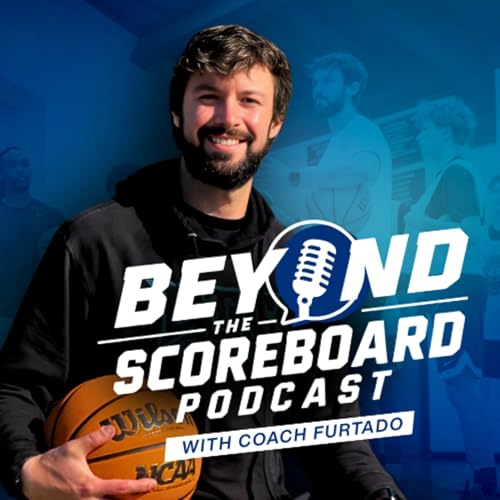
To hear more about how we’re doing things differently at BTG, listen to the full episode of Beyond the Scoreboard.
Full Episode Transcript
[00:00] When we turn a kid's game into a business, it's a slippery slope. And I'm going to talk about that. It’s become a professional model, but youth sports will never be professional sports. 12-year-olds should never, ever, ever train like a professional. If they do, they’re going to get burnt out—I'm telling you that right now. I have really good relationships with athletes I started coaching four years ago. Now that they’re seniors, a lot of them are incredibly burnt out. It’s not that they don’t like the sport anymore; it’s that they’ve had too much of a professional-style commitment far too early.
[01:15] Hello everyone and welcome back to Beyond the Scoreboard. The podcast passing wisdom to coaches and parents who transform athletes beyond the game. I’m your host, Coach Furtado, and I’m tackling a big challenge: the entire system is broken. If you're listening, you know this is being talked about everywhere online. But I don't just want to talk about it; I want to talk about how BTG Basketball has been part of the issue and how we’re working to be the solution.
[02:45] 53% of kids quit sports by age 13 because it’s not fun anymore. One big reason? 12-year-olds have become products. They’ve become commodities with a sticker price. "Give me $500, let me get eight of them, and we’re going to drill, drill, drill." The parents are the customers, it’s a business, and that’s a slippery slope. When we treat a kid's game like a corporate transaction, we lose sight of the mission: the growth of the child.
[04:30] In the Pros, you pay for a contract for performance. In youth sports, people think a fee guarantees a role. "If I pay, my kid plays." In what world does that prepare a young person for life? Back in the day, you had to earn your time. Now, you just pay for it, and that does our kids a huge disservice. I’m not going to lie—we were one of those clubs last year. I wasn't intentional about the standards or the communication. This season, we’re changing that. We’re being transparent: your player has to rebound X, play defense X. We are going to communicate exactly how your athlete earns their growth.
[06:15] We have to remember who our customer is: it’s a kid. A human being. They’re navigating social media, negativity, and an enormous amount of comparison. We have to build trust. And look, 80% of American coaches have zero training. I’ve coached against so many guys in AAU who have no idea how to coach young people. There is a massive difference between coaching pros and coaching kids. Unless it's Varsity—which is the only time you can really focus on the professional standards of winning—we have to be teachers.
[08:00] Psychological safety is the number one thing every coach should provide. We need safe spaces for youth to fail, connect, and improve. That doesn’t mean we don’t hold them accountable. We’re actually going to have super high standards for effort and being a teammate. Right now, individualism and ego are at new heights. All kids care about are "clips" for social status. As coaches, you have to understand what you’re fighting for. If you want a kid to take a charge or play great defense, you have to feature those things and make that the culture.
[09:45] At BTG, we do "Dogs of the Day." Last year, we let the athletes vote, but they usually just chose their friends. This year, the coaches choose three players who showed the best effort, and then the players vote. It’s a balance. I’ve realized where I needed to improve as a coach was giving more structure. I gave too much freedom. This generation needs structure and accountability, but they also need agency. They need a choice. So we say: "Here are the three people who earned it—you decide who wins."
[11:15] Parenting has shifted. In the 80s and 90s, it was all standards and no support. Now, we’ve moved to a model where we’re so supportive we’ve forgotten to apply the discipline. As business owners in youth sports, we have to ask: "Is this policy for the athlete, or is it for our bank account?" I genuinely believe you can do both. You have to be intentional and keep the athlete's development as the "North Star."
[12:30] I get it—the "sticker price" for club sports is high. Average families are paying $1,000 a year, and if you're in a full-year program like BTG, it can be $4,000 to $5,000. That’s a real investment. But you’re paying for an experience that helps them be successful beyond the game. We’ve also built a foundation to remove that financial barrier for kids who are committed but don't have the means. The industry needs to change. Someone needs to hold tournament organizers accountable to ensure every coach has some form of education in child psychology and safety.
[14:00] At BTG, we built a blueprint: 9–11 is Foundations and fun. 12–14 is the club season and high school prep. High school is high-intensity and highly competitive. But more importantly, we’re building a Junior Coach program. I’m hiring kids who just graduated to coach the younger ones. We’re helping them prepare for the workforce. That is the real ROI of the program.
[15:00] The goal of any youth sport business should be to help young people become successful beyond the game, prioritizing their development as human beings over the dollar. That’s what we do at BTG. If you're local, come do a session. If you're a coach listening elsewhere, message me. We need a team of people to change this culture and get back to having the kid be the number one reason we’re all here. Thanks for listening. Coach Furtado out.